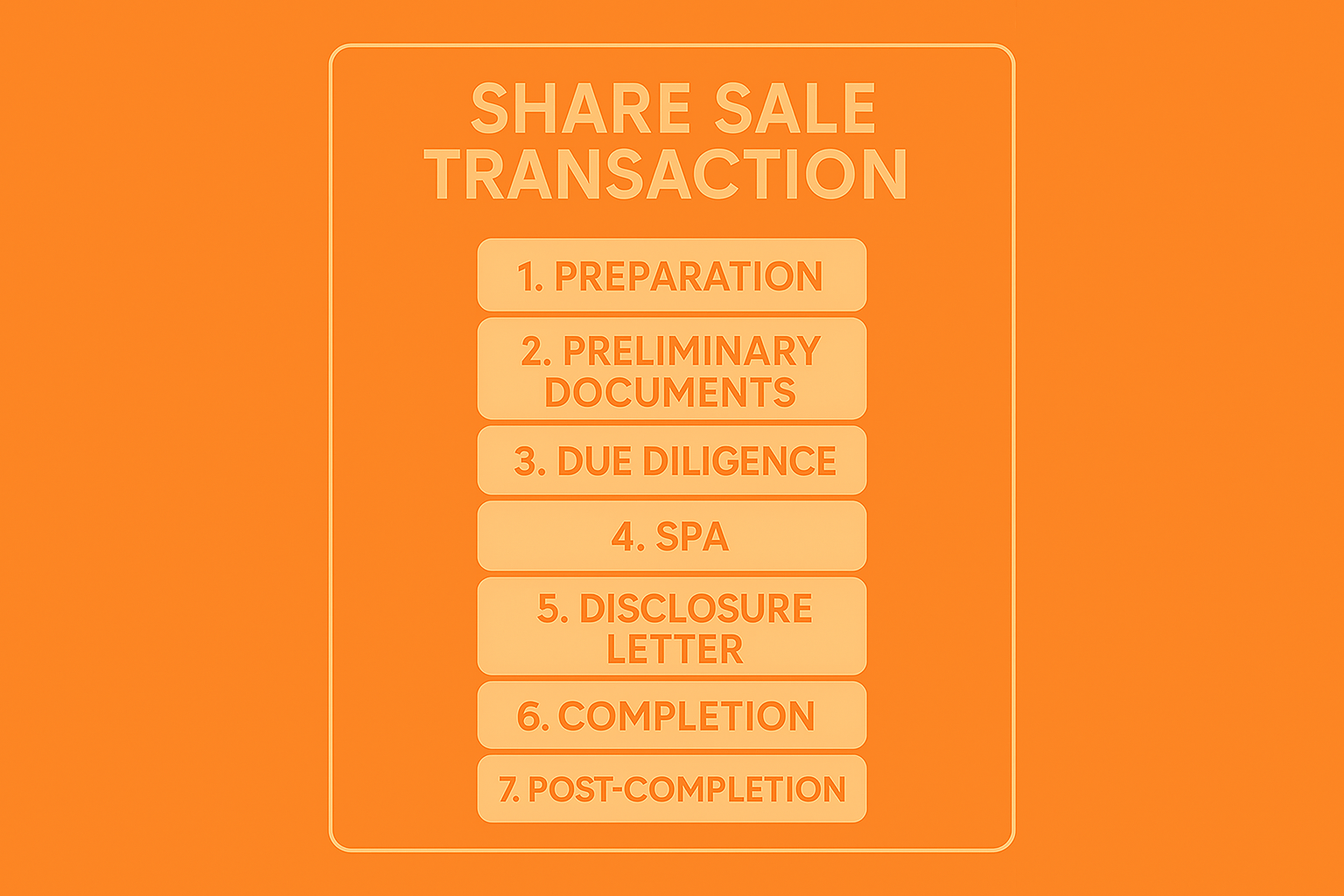
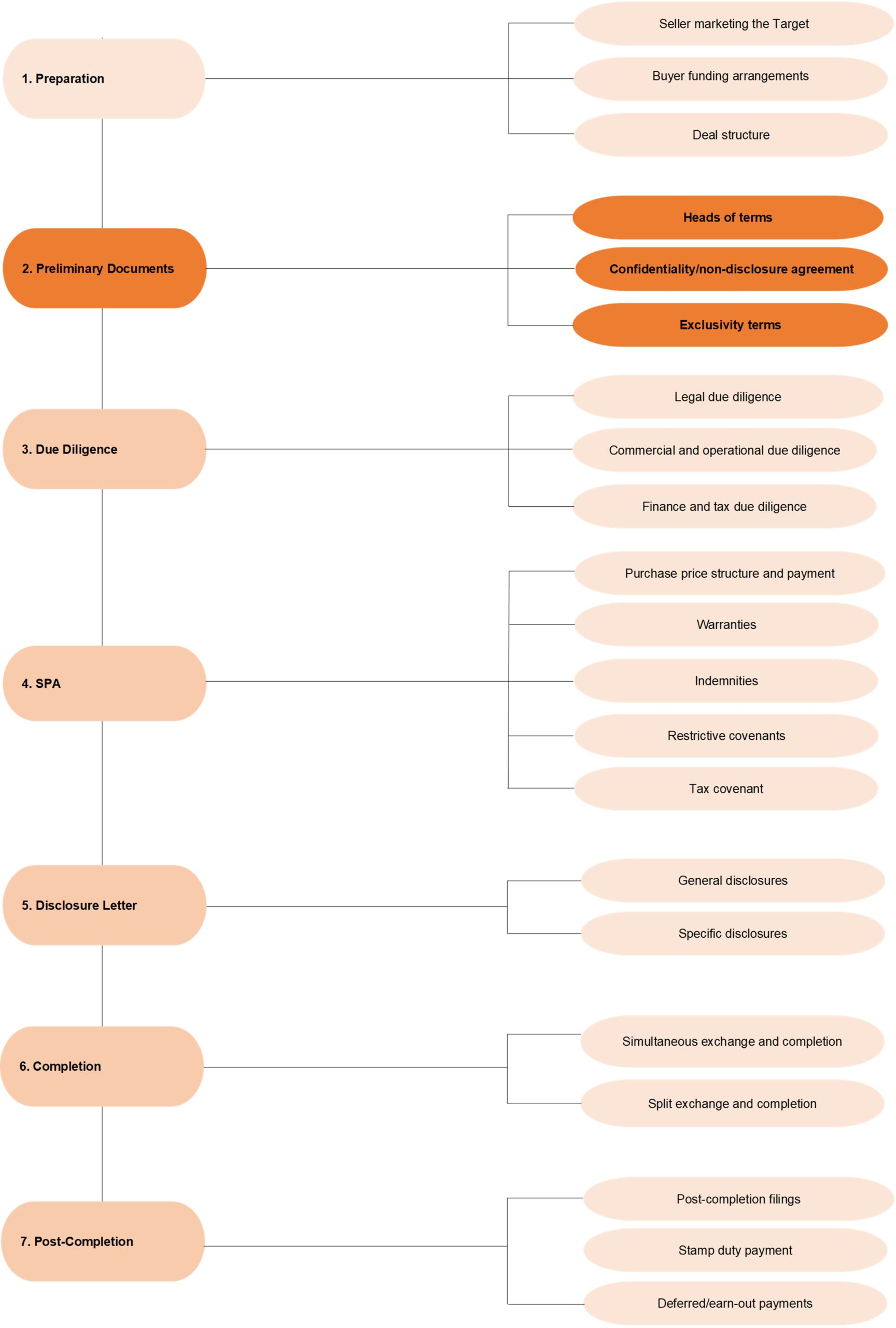
This second article in our Demystifying Corporate Transactions series focuses on the key preliminary documents involved when going through the corporate share sale process. Once a buyer has been identified, these documents help clarify intentions, protect sensitive information, and give both parties more certainty before committing significant time and resources. Below, we outline the preliminary documents you are likely to encounter at this stage.
Heads of Terms
Commonly known as term sheets, letters of intent or memorandum of understanding, heads of terms are non-binding, preliminary documents outlining the principal points of the transaction. Their purpose is to establish the structure and timetable of a deal before legally binding agreements are drafted.
Key points covered in the heads of terms will often include:
- The nature of the transaction
- Price and form of consideration
- Details of any conditions
- Exclusivity periods
- Timetable of the transaction and timing of payment
Using heads of terms demonstrates a serious intention to proceed and helps identify key areas of agreement and disagreement at an early stage. This allows contentious issues to be prioritised and can lead to a more efficient transaction process. However, early agreement does not remove the need for further detailed negotiation when preparing the formal legal documents.
Exclusivity provisions are also usually set out in the heads of terms. An exclusivity clause gives the prospective buyer a defined period during which the seller will not negotiate with or entertain offers from other buyers. This reassures the buyer that time and resources spent on negotiations and due diligence will not be undermined by rival approaches or parallel discussions.
Heads of terms are typically non-binding, affording flexibility as negotiations progress. However, clauses relating to confidentiality, exclusivity, or costs are often expressly stated to be legally binding.
Confidentiality or Non-Disclosure Agreements
A confidentiality agreement or non-disclosure agreement (NDA) is a binding contract that prohibits the parties from disclosing or misusing information gained during the transaction process.
During negotiations and due diligence, the seller often shares sensitive commercial and financial information. A well-drafted NDA:
- Protects trade secrets and business know-how
- Reassures the seller that confidential information will not be used if the deal falls through
- May impose obligations to destroy or return information if the transaction does not proceed
Preliminary documents such as heads of terms and confidentiality agreements play a crucial role in ensuring clarity, managing expectations, and establishing trust between buyer and seller at the outset of a share sale transaction. By setting out the broad commercial terms, protecting confidential information, and including exclusivity arrangements, they help pave the way for a successful and efficient transaction.
The next article in this series will cover the due diligence process, exploring what it entails and why it is an essential step in a corporate share sale.
This article is for information only and does not constitute legal advice. We recommend seeking professional advice before taking any action on the information provided. If you would like to discuss your specific circumstances, please feel free to contact us on 0118 951 6200.