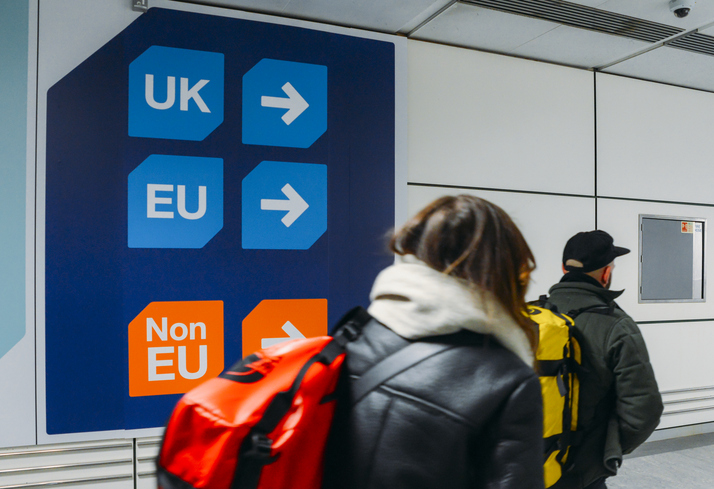
A whole host of changes are set to affect UK arrivals, as part of the Government’s move to a digital immigration system.
The Home Office have recently circulated an update to stakeholders, setting out a series of changes as part of the UK’s ongoing move to a digital immigration system. These changes will take effect from 25 February 2026.
Electronic Travel Authorisation
The Electronic Travel Authorisation (“ETA”), which was first announced in 2022, has been steadily rolled out to non-visa nationals over the last few years.
Up to now, obtaining an ETA before travelling to the UK has been optional for non-visa nationals – but from 25 February 2026, non-visa nationals must have a valid ETA before travelling to the UK.
The only exception to this is where the individual has valid UK immigration permission (for example, a visa or Indefinite Leave to Remain).
British dual nationals
British citizens are not eligible for an ETA, and that includes dual nationals (for example, someone who holds both British and German nationality).
From 25 February 2026, dual nationals must therefore evidence their rights using:
- a valid British passport; or
- the passport of their other nationality, endorsed with a digital Certificate of Entitlement to the Right of Abode (“CoE”).
The cost to apply for a CoE is £589, and the standard processing time is 3 weeks if you apply from outside the UK, or 8 weeks if you apply in the UK. For those dual nationals who already have a vignette sticker in their passport expiring on or after 26 February 2026, this will be automatically replaced with a digital CoE (see below).
In some cases, however, a British passport may be a more cost-effective option. Applying online for a British passport costs £94.50.
A dual national who cannot provide either a British passport or a digital CoE from 25 February 2026 may be denied boarding or face significant delays when entering the UK. Dual nationals should therefore consider applying for either a British passport or a digital CoE well in advance of any planned holidays into or out of the UK.
Visa national visitors
Visa nationals cannot apply for an ETA and must first instead a Visitor visa if they are planning on travelling to the UK (unless they have another form of immigration permission, such as a work visa).
For any Visitor visa application paid for on or after 25 February 2026, successful applicants will receive an eVisa, rather than a visa vignette sticker in their passport.
This change will mean that, when attending a Visa Application Centre to provide biometric information as part of their Visitor visa application, applicants will no longer have to surrender their passport and either collect it or have it couriered to them once their application is processed. Instead, the passport can be returned to the applicant at the end of the appointment, allowing them to retain it while they wait for a decision on their application.
The Home Office have stressed the importance of all eVisa holders (including children) creating a UKVI account to access and check their eVisa prior to travelling. Failing to do so could result in delays and additional checks prior to boarding or at the UK border.
Digital Record of Exemption
Certain individuals are exempt from immigration control (such as members of government and some members of the armed forces). To date, this has been proven using a physical exempt vignette passport sticker. From 25 February 2026, these individuals will instead receive a Digital Record of Exemption, which the Home Office say will make it easier to prove that they are exempt from immigration control.
Digital Certificate of Entitlement to the Right of Abode
We have already covered CoEs in the context of dual nationals, but from 26 February 2026 all valid CoE holders will automatically receive a digital CoE and will receive an email invitation to create a UKVI account to access this. Any new applications for a CoE made from outside the UK will also receive a digital CoE.
While digital CoEs do not need to be renewed upon the expiry of a passport, CoE holders will need to ensure that they update their UKVI account with their new passport details whenever they renew their passport.
If you have any questions regarding the ETA, dual nationality, applying for British citizenship or a British passport, or any of the other matters addressed in this article, please get in touch at immigration@fsp-law.com
This article is for information only and does not constitute legal advice. We recommend seeking professional advice before taking any action on the information provided. If you would like to discuss your specific circumstances, please feel free to contact us on 0118 951 6200.