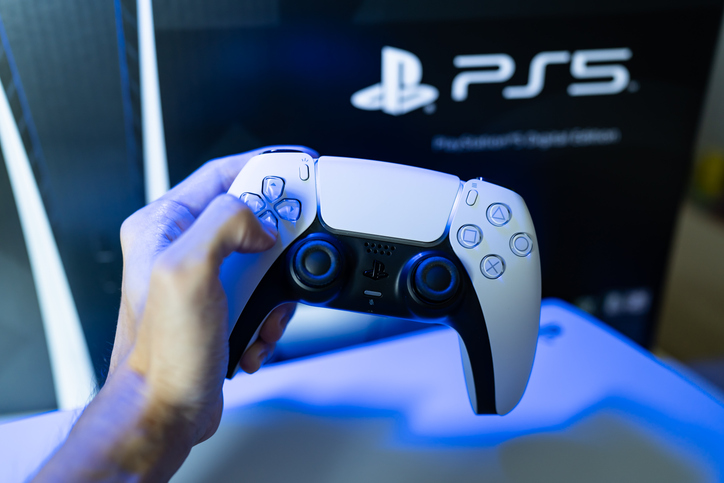
When you pay £70 for a game, what exactly do you own? Sony’s decision to end physical PlayStation game discs has reignited a debate that reaches far beyond gaming, touching on digital ownership, consumer protection, and the growing gap between buying a product and licensing access to one…
On 1 July 2026, Sony announced that physical disc production for new PlayStation games would cease from January 2028. After that date, new releases will be sold digitally through the PlayStation Store and via redemption codes from retailers. Sony has pointed to changing consumer habits and a shift towards digital distribution, with digital purchases now accounting for most PlayStation software sales. Many players now purchase games directly via online storefronts rather than in physical form.
The announcement has sparked debate. Whilst many players value the convenience, others see the decision as part of a shift from ownership to licensed access. In turn, this has raised important questions about consumer rights, game preservation, competition, and what it really means to “buy” a game.
Sony acknowledged the criticism. Executives have recognised that many gamers value physical collections and the corresponding sense of ownership, but the company has publicly confirmed that it intends to proceed with the transition.
Long-time gamers may remember a similar controversy during the launch of the Xbox One in 2013. Microsoft initially proposed a series of restrictions on physical games, including online authentication requirements and limitations on lending and resale. The backlash was so severe that Microsoft ultimately reversed many of the policies before launch. At the time, Sony positioned itself as the defender of traditional ownership, publicly emphasising that PlayStation users could buy, lend, resell and “keep forever” their physical games. Sony’s presentation was widely viewed as a direct contrast to Microsoft’s approach, and helped establish PlayStation as the more consumer-friendly platform during that console generation. The contrast between Sony’s stance in 2013 and its decision to end physical game discs from 2028 has not been lost on many consumers, and has become a recurring theme in some current conversations about digital ownership.
At the heart of the debate is a simple question: When a player spends £70 on a game, what exactly are they buying?
Old-skool cartridges vs modern licences
Let’s get a quick comparison by looking at how gaming used to work in days gone by…
A player purchasing a Super Nintendo cartridge in the 1990s acquired a complete product. The game was stored on the cartridge itself, there were no patches, no downloadable content, no online authentication requirements and no dependency upon access to remote servers. As long as the cartridge and console continued to function, the game remained playable.
Modern gaming is often more complicated. Even when a game is sold on a physical disc, significant portions of the experience may be delivered digitally via day-one patches, bug fixes, downloadable content, and online features. Some titles, including (controversially!) certain single-player games, rely on online servers to function at all.
So how does this work then? With the disappearance of physical media, consumers will generally receive a digital licence governed by the platform’s terms & conditions and the publisher’s end-user licence agreement (“EULA”). Those agreements, typically treated as binding contracts when users actively click to accept the terms, make it clear that the consumer is acquiring a limited right to access the software, of course rather than unrestricted ownership of it. The wording of these agreements doesn’t override consumer protection legislation. The Consumer Rights Act 2015 (“the Act”) is applicable to digital content being supplied in the UK, and provides statutory protection relating to quality and performance. Businesses cannot exclude liability for those rights simply by including contrary wording in a licence agreement.
In addition, regardless of the wording of an EULA, clauses permitting unilateral changes without a valid reason, or otherwise disproportionately disadvantaging consumers, may be vulnerable to challenge under the unfair terms provisions of the Act. Whilst there has so far been little reported UK litigation concerning video game EULAs specifically, consumer contracts must generally be fair and transparent, meaning that unfair terms may not be enforceable.
But can my access be revoked?
A common criticism of modern digital gaming is that consumers may pay full retail prices while receiving only a revocable licence. Access to a game may depend on online stores, authentication systems, cloud storage, server access, live-service connection requirements, publisher support, and a variety of other elements outside the consumer’s control. If any of those elements disappear, access to the game may be affected.
Consumer frustration with this model has become encapsulated in the slogan:
“If buying isn’t owning, then piracy isn’t stealing.” It’s a slogan that’s associated with the Stop Killing Games campaign, linking to concerns about digital ownership and game preservation. Campaigners have called for reforms that would require games to remain playable in some form after official support ends, particularly where consumers have paid for the product outright. The slogan has no basis as a legal proposition, but it reflects the perception that products marketed as purchases actually resemble temporary licences.
Modern games are increasingly dependent on infrastructure controlled by publishers and platform operators. If support is withdrawn, servers are switched off, or licensing arrangements change, consumers may find themselves unable to access content they believed they had purchased.
The UK Government has indicated that it does not currently intend to require publishers to maintain older games indefinitely, but nevertheless, businesses must avoid misleading consumers about a game’s future availability, and consumer protection rules may still apply where inaccurate impressions are created.
Could a company sell a game and then remove access?
Companies are bound by contractual obligations, consumer protection law, and (hopefully!) an inherent concern for their reputation. A publisher that routinely withdrew access to purchased products would likely face significant consumer backlash.
That said, examples from the wider digital entertainment sector show that content can (and has) become unavailable. Licensing disputes, service closures and server shutdowns have all resulted in consumers losing access to digital products they previously purchased. This is because modern gaming increasingly relies on an ecosystem that extends beyond the software itself. If an online-only game loses server support, the practical value of the licence may become significantly reduced, even if the licence itself technically remains in existence.
Consumer protection law also requires businesses to provide material information (at the point a “purchase” is made) that could affect purchasing decisions and prohibits misleading omissions. However, there is currently no general legal requirement for companies to support digital games indefinitely.
“Buying” a digital licence and UK consumer rights
In September 2024, California enacted Assembly Bill 2426, which came into force on 1 January 2025. The law restricts the use of terms such as “buy” and “purchase” unless consumers are clearly informed that the transaction grants a licence rather than unrestricted ownership. Businesses must either obtain explicit acknowledgement from consumers or provide clear and prominent disclosures.
Although the UK has not adopted equivalent legislation, consumers here are not without protection:
- Games that are sold digitally must be of satisfactory quality, fit for purpose and as described.
- If faulty, consumers have the right to require repair or replacement. If unsuccessful, a price reduction can be acquired (up to the full amount paid). There is no automatic right to reject digital content and gain a refund simply by returning it, however.
- Consumers retain protection against unfair contract terms, and licence agreements can’t remove statutory rights.
- Buying a digital game usually comes with a 14-day cooling-off period, however this right can be lost once the consumer agrees to immediate download and acknowledges any cancellation rights end when delivery begins.
Despite these protections, UK law has not yet fully resolved many of the issues created by modern online-only gaming models and server-dependent products, leaving some uncertainty around long-term access and preservation.
Competition concerns
The move away from physical media also raises competition concerns. Physical games have traditionally enabled consumers to compare prices between retailers, purchase pre-owned copies and seek out discounts. A purely digital market reduces some of these alternatives, particularly where a platform holder controls the primary storefront.
The UK’s Competition and Markets Authority has previously examined aspects of the gaming sector, including subscription practices adopted by Sony, Microsoft and Nintendo. Those investigations focused on issues such as automatic renewals, cancellation rights, refunds, transparency of subscription terms, and the risk of consumers becoming locked into recurring payments. The investigations ultimately resulted in several changes to industry practices and undertakings being given by the relevant companies.
More recently, Sony has faced collective legal proceedings before the UK’s Competition Appeal Tribunal alleging that PlayStation users were overcharged because digital purchases on PlayStation consoles can only be made through the PlayStation Store. The claim argues that Sony’s control over digital distribution reduced competition and resulted in higher prices for consumers. Sony denies the allegations, and the proceedings remain ongoing.
Resale and second-hand markets
Moving from physical discs to digital downloads also affects resale rights. A physical game can usually be sold, traded or gifted after purchase, or lent to mates for the weekend. Legal principles generally don’t allow resales of downloaded games, and some players are concerned that this could be the beginning of the end of the second-hand game market.
The broader risks for UK consumers
Sony’s decision highlights a wider challenge affecting digital entertainment generally and the risks connected to licensing digital games to consumers, including:
- Control of the product being generally out of the consumer’s hands.
- Loss of access following server or store closures.
- Reduced game preservation and long-term access to purchased content.
- Restrictions on resale and transfer.
- Increased dependence on platform operators.
- Reduced competitive pressure on pricing.
For consumers, the key issue is becoming difficult to ignore: When we click “buy”, what are we actually acquiring? A product that we own and control, or a licence that exists only for as long as the platform, publisher and supporting infrastructure allow it to exist?
Regulators are beginning to examine that question, and consumers are increasingly asking it.
If you’re a consumer with questions about your rights when “purchasing” digital content, or a business reviewing its licensing arrangements, please get in touch with Matt Schrader at matt.schrader@fsp-law.com or please contact our Commercial, IP & Technology Team.
This article is for information only and does not constitute legal advice. We recommend seeking professional advice before taking any action on the information provided. If you would like to discuss your specific circumstances, please feel free to contact us on 0118 951 6200.